


I, Jack Wright cast and creator on the family saga and courtroom drama thriller, sparked by the reading of a Will
As his many wives and children fight over the remains of his estate, a dogged police detective investigates – and uncovers the shocking truth about a man’s well-heeled clan.
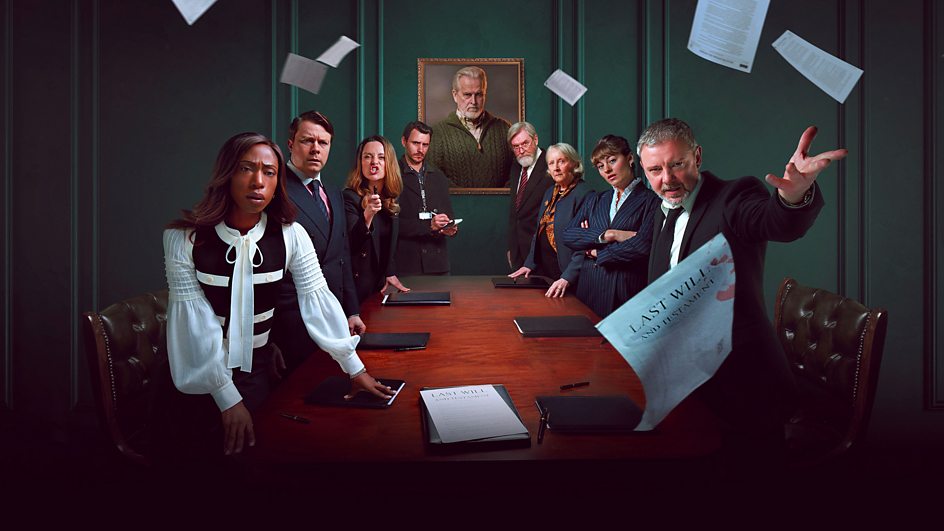
A death in the family. A bombshell will. A murderer in their ranks?
The apparent death by suicide of high-powered businessman Jack Wright sends shockwaves through his family.
As his many wives and children fight over the remains of his estate, a dogged police detective investigates – and uncovers the shocking truth about this well-heeled clan.
Chris Lang (writer/creator of I, Jack Wright)
What was your inspiration behind the series?
The idea came from a conversation with a friend whose mother’s Will caused huge familial ructions. Although she understood the financial reasoning behind her mother’s decisions, she was still left with a lot of unanswered questions and emotional distress, and I was struck by how potent an echo of a lived life a Will can be.
That became the foundation of the story, which I expanded into a larger family saga, a thriller and a courtroom drama, with all three of those genres interweaving throughout the story.
Can you tell us about its journey from script to screen?
The journey from script to screen was a long one. Ideas often come to you and stay with you for a long time before they find the right form. Over time, it went through different versions as I refined it and shaped it into what it eventually became. I took the idea to production company Federation Stories and they just got it.
What happens at the reading of the Will?
The Will hearing is the event that sets the whole series in motion. I always knew it had to come at the end of episode one because it brings all the key characters together and marks the point where the main story begins. In that scene, our key characters are sitting around a table, waiting to be told their fate.
For many of them, this is a life-changing moment they have been relying on and hoping will improve their future. However, for some, the outcome is disappointing and leaves them much worse off than they expected. As a result, the will hearing creates resentment, jealousy and bitterness. While some feel good about what they’ve received, they also know the others may be coming to take it from them.
It’s the perfect starting point for the drama that follows.
How was the scene shot?
It’s a highly stylised scene that uses a range of visual devices, including freeze frames, voiceovers and flash-forwards. The sequence is complex because it reveals the characters’ psychology from multiple perspectives, showing how they feel in the moment and how those feelings evolve two years later. It allows the audience to examine the impact of the revelation in a forensic way. Ultimately, that’s what the series is about: understanding the psychology of people raised within a family led by a deeply toxic man.
Can you introduce the Wright family and its central character, Jack?
In order to sustain the story and the series, I had to create this extraordinary character at the heart of it. Although he dies very early in the story, his presence lives on in the actions and the thoughts of every character, shaping their memories and relationships. His portrait stares down at them in their homes and the boardroom, so he appears in many scenes.
Ambitious and driven, Jack married three times and built a remarkable life, but he left behind damaged relationships and lasting hurt. At its core, the story follows those closest to him as they try to rebuild their lives in the shadow of his death.
Why have the interviews in the future been set up in a true crime style? How does it add to the story?
I wanted to experiment with the idea of seeing the characters in two different timelines. Obviously, the body of the drama is about them in the present day, but I always thought it would be interesting to show where they end up. It’s a powerful tease and provokes endless questions in the audience’s mind about how they got there and what their journey was along the way.
link to article & Interviews

 Just as The Queen’s actual long-term dress designer Hardy Amies isn’t actually called Hardy Amies here and her milliner isn’t called Freddie Fox either (they’re simply billed as The Designer and The Milliner respectively), the Queen’s Dresser is simply billed as just that too. But many of know who she is: Liverpool-born Angela Kelly (official title: Personal Assistant, Adviser and Curator to Her Majesty The Queen, Jewellery, Insignias and Wardrobe) who, for almost 30 years, oversaw every detail of everything The Queen wore and, in the Queen’s latter years, rustled up those creations herself.


